NHanCE Lab:
Autonomous Vehicle Human Interface Research
How does initial exposure to accurate or inaccurate AV confidence information shape driver behavior, trust, and physiological response over time, particularly among elderly users? This is the question I'm designing and researching around at NHanCE Lab.
Dash AVS in action. Check out the source code and the demo. In this Dash AVS app, you can play an interactive clip containing a scene, which is a segment of a car trip with data collected from LIDAR sensors, cameras, GPS, the car itself, and from human annotators (e.g. the bounding box annotations).
Autonomous vehicles constantly communicate confidence to the humans inside them, whether or not that confidence is accurate. My research at NHanCE Lab looks at what happens when that first signal is right versus wrong, and how that shapes a rider's trust, behavior, and even physiological response over time, with a particular focus on elderly users.
The work spans three threads: grounding the study in existing literature on trust calibration, building the real-time confidence display participants interact with, and communicating findings across a cross-disciplinary research team.
The same problem shows up in enterprise software. Any tool that hands people an automated recommendation, from an AI assistant to a system monitoring dashboard, has to help operators decide when to rely on it and when to step in. This study looks at that decision in one of its highest-stakes forms.
How might an autonomous vehicle's confidence display help elderly riders trust the system the right amount, even when its information is sometimes wrong?
What the SAE levels mean
The Society of Automotive Engineers (SAE) sorts cars into six levels, based on how much of the driving the car does and how much the person still has to do.
The person does all the driving. The car may only give warnings, like a beep when you drift out of your lane.
The car helps with one thing at a time, such as keeping a set distance on the highway. The person does the rest.
The car can steer and control speed together, but the person must watch the road the whole time.
The car drives itself in certain conditions. The person can look away, but must take over when the car asks. This is the level this study focuses on.
The car drives itself within a set area or set conditions, and does not need the person to take over there.
The car drives itself anywhere, in any conditions, with no person needed.
Autonomous vehicles are classified by the Society of Automotive Engineers into six levels of automation. At SAE Level 3, a vehicle can handle most driving tasks on its own, steering, braking, monitoring the environment, but it is not fully autonomous. It still requires a human driver to be available and ready to take control when the system reaches its limits, like navigating unexpected road conditions or complex intersections. Think of it as a co-pilot that does most of the work but can hand the controls back to you at any moment.
To help drivers know when to step in, Level 3 AVs display real-time confidence information through in-vehicle human-machine interfaces, essentially showing how certain the system is about handling a given situation. The problem is that this confidence display is not always accurate. Sensors fail, systems misjudge conditions, and when drivers repeatedly encounter information that does not match reality, they form cognitive biases that shape whether they trust the system, and when they decide to take over.
Trust calibration over time
How initial exposure to accurate vs. inaccurate AV confidence information creates diverging trust trajectories
Research consistently shows that a rider's first exposure to AV confidence information sets the trajectory for everything after. When that first signal is accurate, trust climbs quickly and settles into a stable, well-calibrated range. When it's wrong, even once, trust drops sharply and only partially recovers, even after a long run of accurate signals that follow.
Key sources: Lee & See (2004) · Mishler & Chen (2023) · Liu et al. (2024) · Tijerina et al. (2016) · Pennycook et al. (2018) · Endsley (1988)
Conducted a comprehensive review of how users develop and calibrate trust in automated systems, and how elderly populations specifically perceive and respond to AV technology, covering cognitive load, trust repair after failures, and age-related differences in automation acceptance.
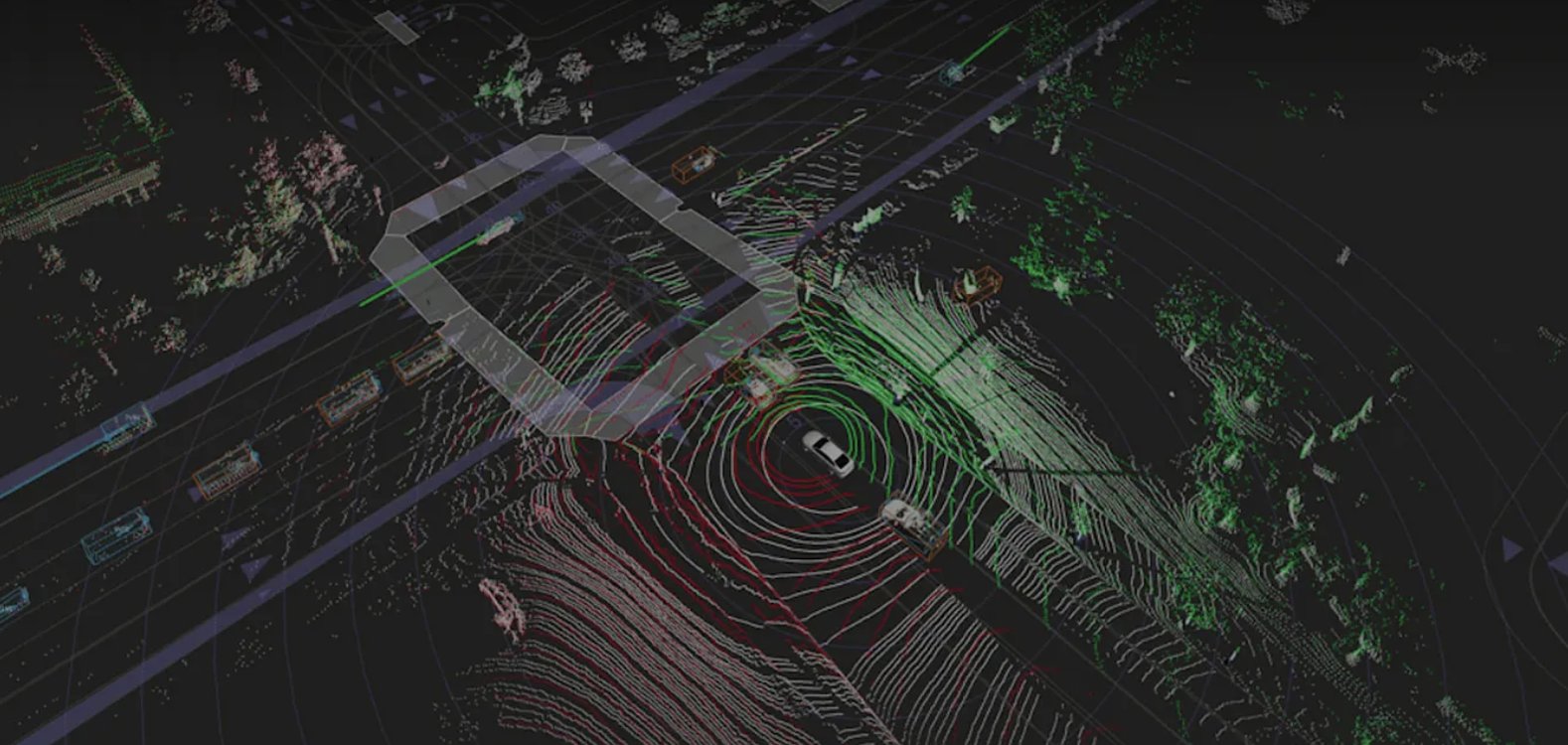
Designed and built the real-time HMI participants see during the study, visualizing the AV's self-assessed confidence navigating a roadway obstacle, clear enough for fast interpretation under real driving conditions.
Base UI referenced Plotly's Dash AVS Explorer
Presented research progress and HCI concepts to collaborators across engineering and human factors, translating technical findings into accessible insights for a cross-disciplinary audience.
AI & Technical Approach
Prototyped and refined the confidence display in Figma before building it as a real, working interface in Python. Used Claude Code to move quickly between iterations while keeping the interaction design decisions, what to show, when, and how urgently, my own.
Why it matters for enterprise UX
The questions this study asks about cars map directly onto the AI and automation tools enterprise teams build.
Designing confidence displays so operators trust automated recommendations the right amount, not blindly and not too little.
Designing handoffs for systems that run on their own until they reach a limit and need a person to step in.
Designing for the moment an AI is wrong, so one bad recommendation does not break trust in the whole tool.
Designing for users with different levels of technology experience, not only power users.
The study is still in progress, so there are no results yet. Here is what exists today.
This was my first time working on research, and it made me fall in love with designing for accessibility and for autonomous vehicle technology.
I am also learning to translate research for different audiences. Explaining trust calibration to engineers and human factors researchers is teaching me to turn academic findings into decisions a design team can act on.
What comes next
- Run study sessions with elderly participants using the confidence display.
- Compare trust, behavior, and physiological response between accurate and inaccurate first exposure.